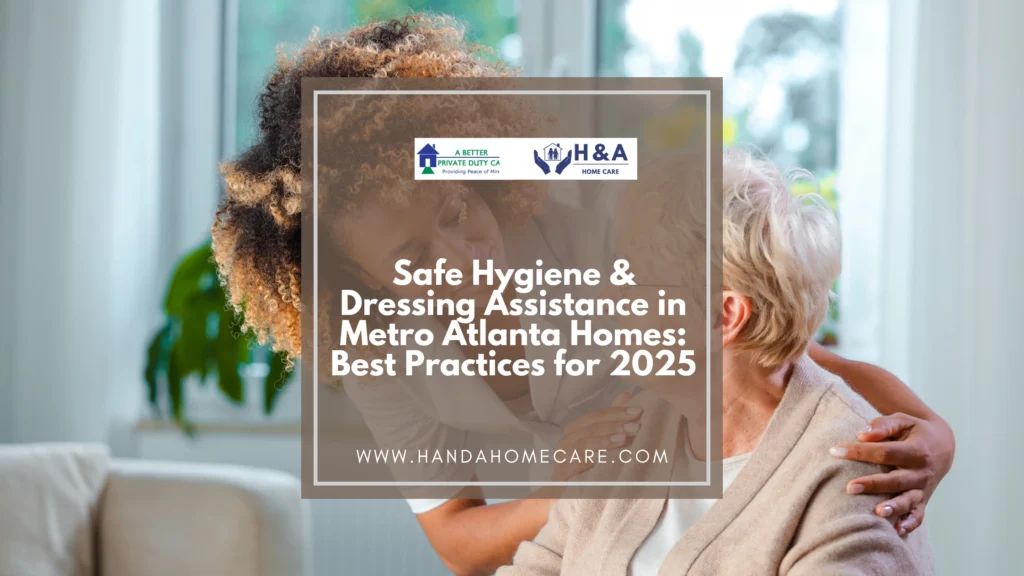
For many Atlanta families, even simple routines like bathing or getting dressed can become daily hurdles. Hygiene and dressing assistance ensures safety, dignity, and independence while supporting seniors in the comfort of their own homes.
Serving metro Atlanta, including Lawrenceville, Gwinnett County, and nearby communities, personal care hygiene is more than a routine. It is a foundation for health, well-being, and peace of mind.
Why hygiene and care is essential
Hygiene and care supports both physical and emotional health. Seniors who receive consistent hygienic care have lower risks of infections, healthier skin, and greater confidence in daily life.
Good grooming hygiene also reduces depression and social withdrawal. Something as simple as a regular haircut, clean clothing, or bathing care helps seniors feel valued and connected to their community.
Everyday challenges with personal care & hygiene
As people age, hygiene and grooming tasks often become harder. Families in metro Atlanta notice challenges such as:
- Arthritis making buttons or zippers difficult
- Fear of falls during bathing services for elderly care
- Limited mobility preventing showers or safe transfers
- Memory issues leading to skipped hygiene routines
- Embarrassment when asking for hygiene help
These struggles can lead to greater risks if not addressed early.
Best practices for hygiene & dressing assistance at home
Families and caregivers across Atlanta follow simple, effective steps to make bathing and grooming safer and more dignified.
Recommended practices include:
- Creating predictable routines for bathing assistance elderly needs
- Using shower chairs, grab bars, and non-slip mats for bathing help for elderly safety
- Offering adaptive clothing that reduces frustration and promotes independence
- Keeping supplies within easy reach during bathing service routines
- Encouraging seniors to participate in tasks such as brushing teeth or choosing clothes
Families often add trained personal care assistants who specialize in assisting patients with personal hygiene to ensure consistency.
Maintaining dignity during hygiene and grooming
Personal care & hygiene is not only about physical cleanliness. It also preserves dignity and confidence.
Personal care aides and personal caregivers help with bathing and grooming assistance while respecting privacy and offering reassurance. Even small acts like applying lotion or helping with hair care build trust and prevent feelings of dependence.
Understanding personal care nursing
Personal care nursing focuses on hygiene personal care, dressing, and grooming assistance. It is separate from licensed medical services.
When medical needs arise, families may add skilled nursing care to cover wound care or medication support. Together, personal care & hygiene and skilled nursing provide a full support system.
Bathing assistance for elderly safety
The bathroom is one of the most common places for falls. Bathing services for elderly adults are among the most important forms of home support.
Safe steps for bathing and grooming assistance:
- Warm the bathroom in advance for comfort
- Provide seating with a stable shower chair
- Use handheld sprayers for flexible bathing help
- Offer choices to reduce anxiety during bathing assistance elderly routines
- Provide warm towels and calming conversation
This balance of safety and compassion ensures bathing care feels less stressful.
Caregiver strategies for hygiene needs
Family caregivers in Atlanta often feel pressure to juggle hygiene needs alongside work and parenting. Consistency is hard, but there are ways to ease the load.
Caregiver tips for hygiene support:
- Break bathing and grooming into smaller, manageable steps
- Encourage seniors to do what they can independently
- Combine grooming hygiene with enjoyable activities like music
- Use sitter services to take breaks and avoid burnout
Adding professional support for bathing and grooming assistance ensures hygiene needs are met without overwhelming families.
Combining hygiene with companionship
Hygiene support and companionship often go hand in hand. Seniors receiving bathing help for elderly care may also benefit from companion care to reduce isolation.
This combination strengthens routines and provides emotional encouragement, which is especially important for seniors living alone in metro Atlanta.
Local trends in metro Atlanta for 2025
Families are increasingly requesting personalized hygiene and grooming routines that reflect cultural preferences and individual dignity. In metro Atlanta, this might include special bathing schedules, clothing choices, or faith-related grooming practices.
Technology is also playing a role. Families are using reminder apps, adaptive clothing, and virtual caregiver check-ins to make hygiene personal care more manageable.
Frequently asked questions
What is included in hygiene and dressing assistance?
Bathing, grooming, dressing, personal hygiene advice, and help with hygiene needs tailored to each individual.
How often should bathing services for elderly be scheduled?
Most seniors do well with two to three sessions per week, though it depends on comfort and health conditions.
Is hygiene and grooming considered medical care?
No. Hygiene and grooming are part of personal care, not licensed medical treatment.
Can personal care nursing provide bathing and grooming assistance?
Yes. Personal care nursing focuses on bathing, dressing, and grooming support while skilled nursing addresses medical needs.
What if my loved one refuses hygiene help?
Approach gently, respect privacy, and use trusted caregivers to reduce resistance.
Atlanta families: keeping dignity in the daily details
Hygiene & Dressing Assistance in metro Atlanta homes is about more than looking clean. It is about reducing risks, preventing illness, and restoring dignity every single day.
With consistent personal care & hygiene support, seniors remain confident while families gain peace of mind. Explore personal care options or contact H & A Home Care to see how local services can fit your family’s needs.